NEWS 1
ETRI Develops Digital Twin-based Software for Wearable Robot Evaluation
- Pre-trial of performance and usability based on digital human-device twins
- Expected to reduce the burden of clinical trials and cut development time and costs
Korean researchers have succeeded in developing a technology that can verify performance and usability of wearable robots1)Wearable robot: A robot worn directly on the body to assist muscle strength and movement or enhance physical function. during the development process without requiring a person to physically wear the device. The technology developed this time is a wearable robot evaluation technology based on a “digital human2)Digital human: A virtual human model that faithfully reproduces biological characteristics such as human body structure, movement, and responses in a virtual environment.-device twin3)Device twin: A digital replica of a real device (robot, equipment, or product) faithfully reproduced in a virtual environment.,” and it is expected to dramatically transform the paradigm of wearable robot development in the future.
Electronics and Telecommunications Research Institute (ETRI) announced that it has developed “digital human-device twin-based integrated evaluation technology for wearable robots” that can pre-verify the performance and usability of wearable robots even without actual users wearing them.
Conventional wearable robot development required repeated wear tests with actual users following prototype fabrication, resulting in significant time and cost burdens. The process of creating a device, having users wear it, and conducting tests had to be repeated multiple times, with any issues necessitating redesign and additional testing.
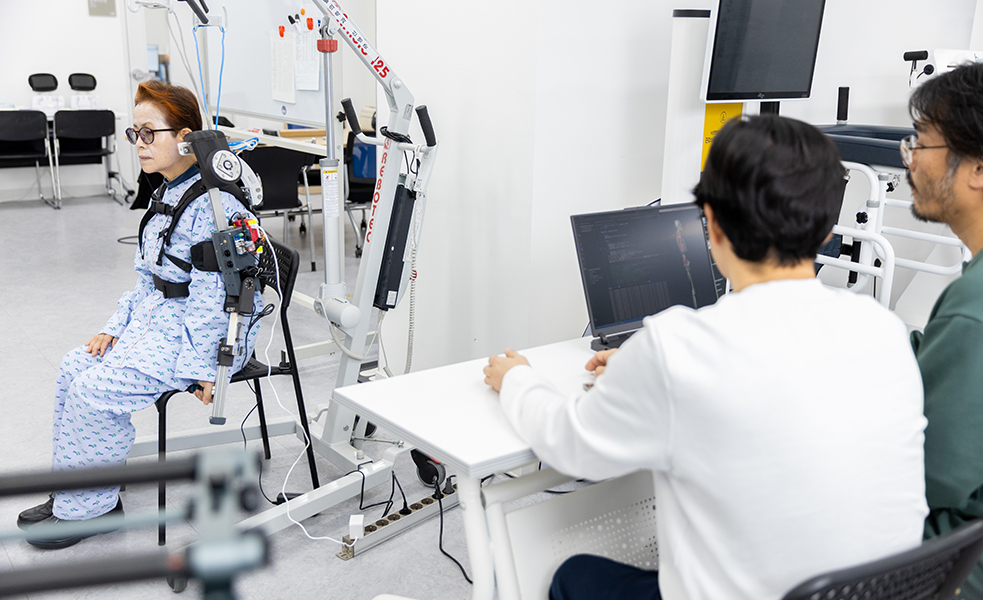
The validity of the technology developed this time was verified through joint experiments with the Glocal Clinical Trial Center at Pusan National University Hospital. Reliable evaluation results were derived by comparing and analyzing the results of clinical evaluations conducted with actual patients wearing wearable robots to perform muscle strengthening, rehabilitation therapy, and five types of basic functional tests with digital twin-based simulation results.
A key feature of this technology is that it can verify the performance of wearable devices and user experience (UX) at the design stage, before actual wearing, by precisely simulating in a virtual environment a diverse range of users who need neurological and musculoskeletal assistance. As a result, it is expected to overcome the limitations of conventional development methods that have inevitably relied on recruiting large numbers of subjects and conducting repeated wear tests.
ETRI researchers built an integrated evaluation framework for wearable robots using digital twin technology that links a physics-based neuro-musculoskeletal digital human twin with a wearable device twin.
This enables the design and performance of wearable robots to be comprehensively verified through software by combining a digital human, representing an actual person, with a device twin, representing the actual device, in a virtual environment.
The research team secured four core technologies through this research. First, there was neuro-musculoskeletal digital human twin generation technology4)Digital human twin generation technology: A technology that quantitatively models the bodily, neural, and musculoskeletal characteristics of a person to generate an individualized virtual human.. By quantitatively modeling the physical and cognitive characteristics of users who need neurological and musculoskeletal assistance, it can create personalized digital human twins for each individual. The team used this approach to create virtual users that precisely reflect the characteristics of diverse clinical target groups.
Second, there was physics-based device twin generation technology. By building an all-in-one software framework capable of generating digital twins that reflect the dynamics and statics structure, control algorithms, and sensor characteristics of wearable devices, scalability to diverse forms of wearable devices was secured.
Third, there was digital human-device linked simulation technology. By precisely simulating the interaction between the digital human and the device twin in a virtual environment, wearability, usability, and interactivity could be quantitatively evaluated. This can significantly reduce the number and cost of clinical trials while deriving user-optimized designs and control algorithms.
Fourth, an integrated system for evaluating wearable robot performance and usability was secured. The team established an evaluation framework that quantifies the performance and usability of wearable devices and can immediately reflect them in the design by integrating simulation results. In particular, this approach enables user experience (UX) metrics such as wearability, usability, and interactivity that had previously been assessed only qualitatively, to be verified against objective indicators.
ETRI announced that it has secured a validated correlation coefficient of 0.65)A correlation coefficient of 0.6: A figure indicating a statistically significant similarity between the actual experimental results and the digital twin-based evaluation results. The closer it is to 0, the less relationship there is; the closer it is to 1, the more similar it is. 0.6 indicates a moderate-to-high level of similarity. or higher for the integrated assessment system, demonstrating a level of reliability comparable to that of wearable robot evaluations conducted with actual patients.
Kim Woojin, principal researcher at ETRI’s AI Robot User Experience Research Section, explained, “Previously, wear tests with actual users were essential for verifying the performance of wearable devices. Using the digital twin-based technology developed this time, diverse user characteristics can be virtually combined and verified, making it possible to derive optimal device specifications and control algorithms in advance with only minimal clinical trials.”
Yoon Daesub, director of the AI Robot UX Research Section, said, “We plan to expand the application of the digital twin core technology secured this time to robot UX fields in which user experience is important, such as rehabilitation robots, walking assist devices, and industrial wearable robots.”
Professor Park Jonghwan of the Department of Convergence Medicine at Pusan National University Hospital said, “The developed robot evaluation and verification technology is expected to draw attention as essential software technology not only for wearable robots but also for the development of various other robots in the future. This technological development is expected to further invigorate related research.”
The research team plans to transfer this technology to wearable robot manufacturers and specialized robot manufacturing companies, pursue commercialization through follow-up R&D projects, and further enhance the completeness of the technology.
The research was conducted as part of the core source technology development project supported by the Ministry of Science and ICT and the Institute of Information & Communications Technology Planning & Evaluation (IITP).
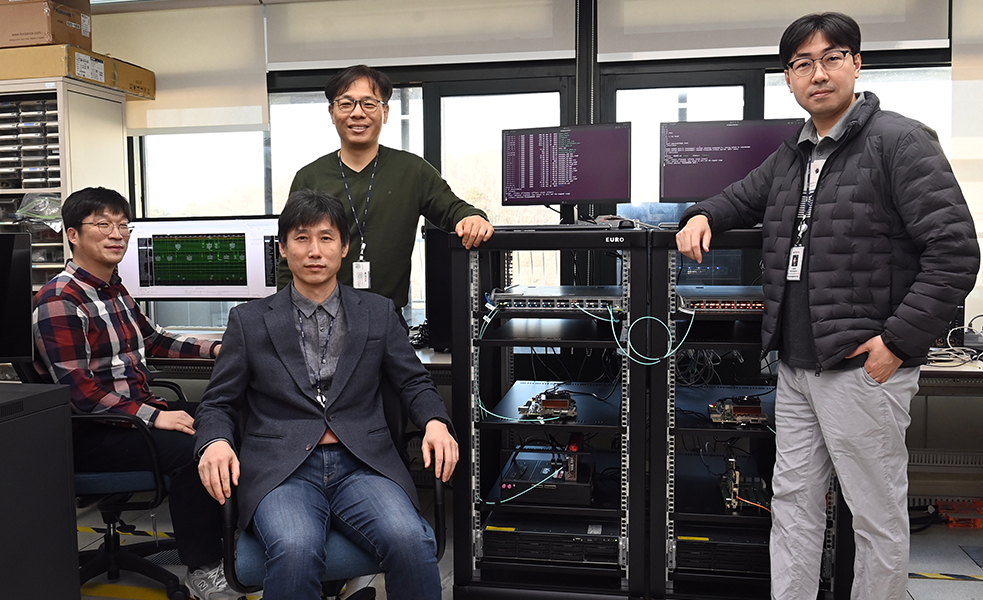
Kim Woojin, Principal Researcher
AI Robot UX Research Section
(+82-42-860-0622, wjinkim@etri.re.kr)