

SPECIAL
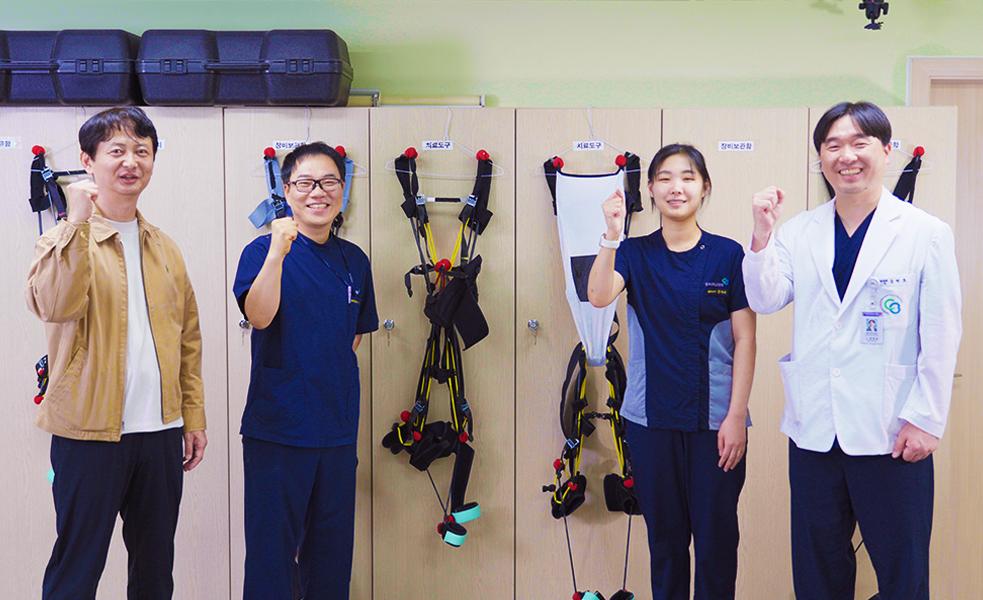
A team of Korean researchers has developed a lightweight “elastic suit” that can support the activities of various groups experiencing physical burdens in daily life, raising expectations.
Electronics and Telecommunications Research Institute (ETRI) announced that it has developed an ultra-lightweight wearable assistive device based on a tensegrity structure1)Tensegrity structure: A compound word of Tension and Structural Integrity. A structural principle in which strings (tension elements) and rods/supports (compression elements) balance each other to maintain their shape on their own. to help the physical activities of the elderly, rehabilitation patients, and workers, and confirmed the effect of improving physical functions through clinical trials.
The elastic suit developed by the researchers this time was designed to solve the weight, price, and wearing burden problems of existing wearable robots. It is notable that the device is designed to deliver a sub-1kg lightweight wearing experience, affordability, and sufficient physical assistive functions.
The tensegrity structure applied to the elastic suit by the researchers helps the suit maintain a stable shape through a balance of tension and structural integrity, which is similar to how umbrellas or tents secure a stable structure through light strings and frames.
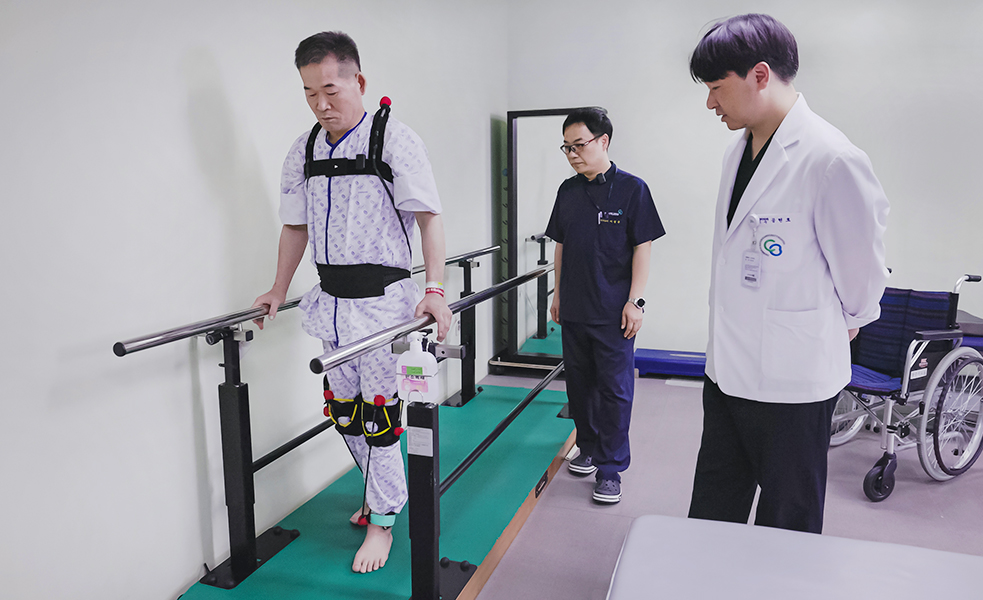
ETRI applied this principle to human assistive devices to naturally and smoothly support the spine and lower limbs, successfully reducing the user’s physical burden in basic daily movements such as sitting and standing, walking, and lifting objects.
In particular, this technology promotes efficient movement by naturally assisting balance at necessary moments without hindering the user’s movement, and assists the muscle strength and endurance of users with reduced physical functions.
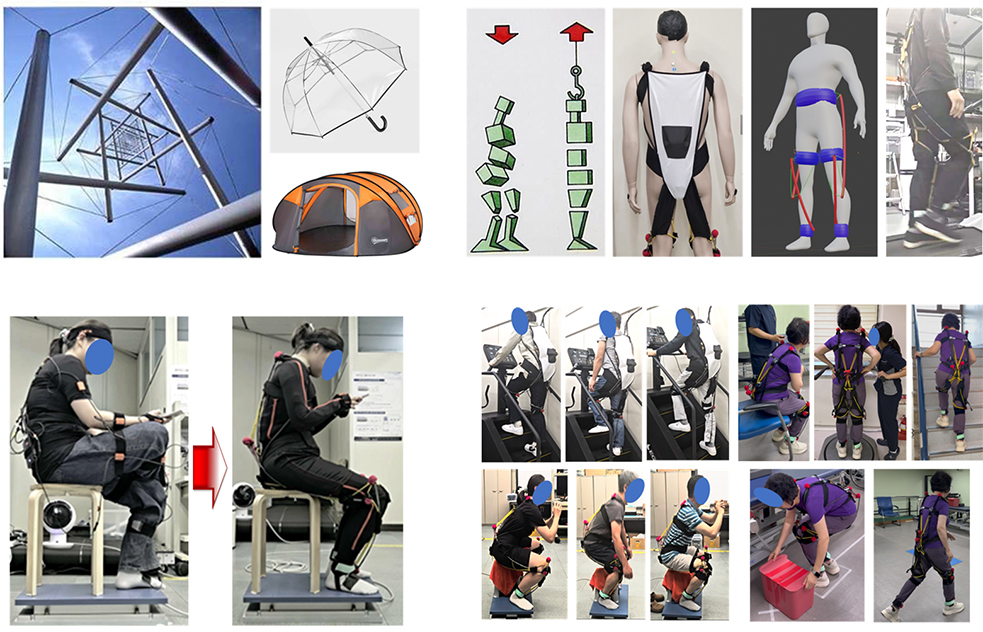 (From the top left, clockwise) Example of tensegrity structure / Elastic suit based on tensegrity structure / Posture change before and after wearing / Wearing effect analysis process
Dr. Shin Hochul of the ETRI Human Enhancement & Assistive Technology Research Section, who is developing this technology, explained, “This technology was inspired by the musculoskeletal structure of the human body, and it is a platform that can be expanded from passive products under 1kg to active systems equipped with motors and AI.”
ETRI conducted clinical trials on 20 elderly people aged 65 and older or people with physical disabilities in collaboration with the Department of Rehabilitation Medicine at Chungbuk National University Hospital to verify the effectiveness of the elastic suit. The joint research team analyzed major physical functions such as walking speed and balance, lower limb muscle strength, and cardiorespiratory endurance before and after wearing.
The result showed that walking speed increased by approximately 14%, the time taken to carry objects was reduced by about 22%, and stair climbing and descending time by about 18%. The ability to perform sit-to-stand, which indicates lower limb muscle strength, improved by about 40%, and walking distance, an indicator of cardiorespiratory endurance, also increased by about 9%, confirming the overall physical function improvement effect. In addition, high satisfaction was shown in subjective survey results such as wearing effect, perceived weight, and structural safety.
Professor Kong Hyunho of the Department of Rehabilitation Medicine at Chungbuk National University Hospital, who was in charge of the clinical trial, said, “The elastic structure naturally supports movement and balance, so a significant improvement effect seems to have appeared especially for the elderly with reduced physical functions. Going forward, we plan to further optimize the auxiliary effect through customized designs tailored to the degree of disability and body type. The results of this study will be an important basis leading to the possibility of various clinical applications such as walking assistance for the elderly and rehabilitation training.”
Based on this elastic suit technology, ETRI is currently preparing for actual use tests of the elastic suit at various sites such as elderly rehabilitation centers, day care centers, and industrial sites. Furthermore, it plans to promote commercialization in the future to contribute to solving medical, care, and labor environment problems faced by an ultra-aging society.
This research was conducted as part of the “Development of Autonomous Soft Suit Technology for Enhancing Exercise Ability” project with the support of the Ministry of Science and ICT and the Institute of Information & Communications Technology Planning & Evaluation.
Shin Hochul, Principal Researcher
Human Enhancement & Assistive Technology Research Section
(+82-42-860-6036, creatrix@etri.re.kr)