
The Beginning of 6G Hyperspace
Communications Linking Ground and Satellites
6G Satellite Communication Technology
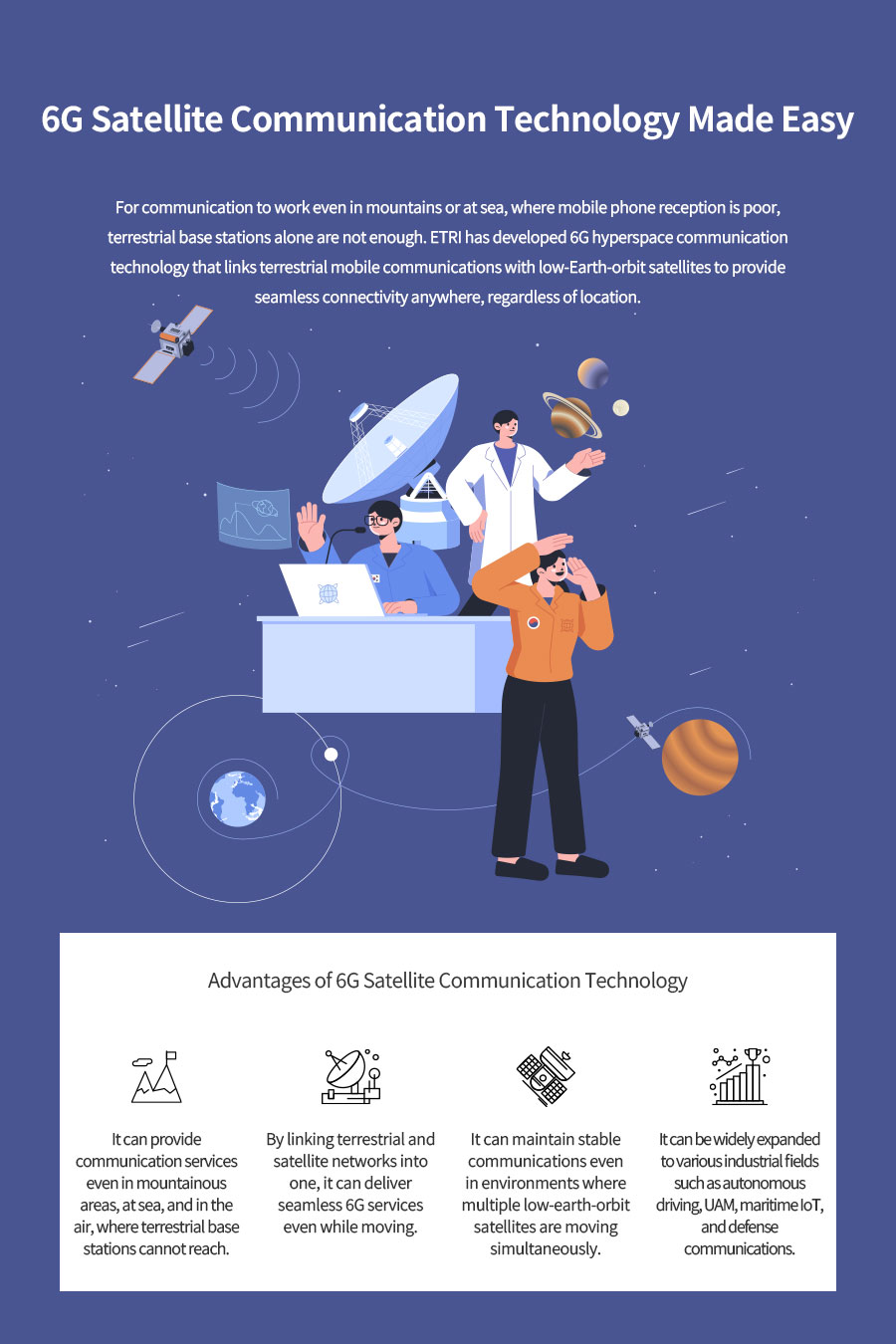
In the 6G era, networks will expand beyond terrestrial base stations into a hyperspace infrastructure connecting the sky and the sea, the air and remote areas. ETRI has developed core technology for an integrated terrestrial-satellite 6G network that combines terrestrial mobile communications with low-Earth-orbit satellite communications, taking a step closer to realizing a next-generation communication environment that overcomes the constraints of time and space.
• • •
6G,
Expands from the Ground into Space
From 1G to 5G, mobile communications have developed around terrestrial networks. However, the future that 6G envisions is different. Its core goal is seamless connectivity across islands, mountainous regions, the sea and the air, and even beyond national borders. The foundational technology that makes this possible is low-Earth-orbit satellite communications.
The international community is also paying attention to this trend. ITU-R has included satellite communications as a core element of its 6G vision (IMT-2030), and 3GPP is fully accelerating the standardization of NTN (Non-Terrestrial Network), which combines terrestrial and satellite networks. A three-dimensional network encompassing the ground and satellites is the starting point of 6G hyperspace communications.
Core Technologies for
Ground–Satellite Integration
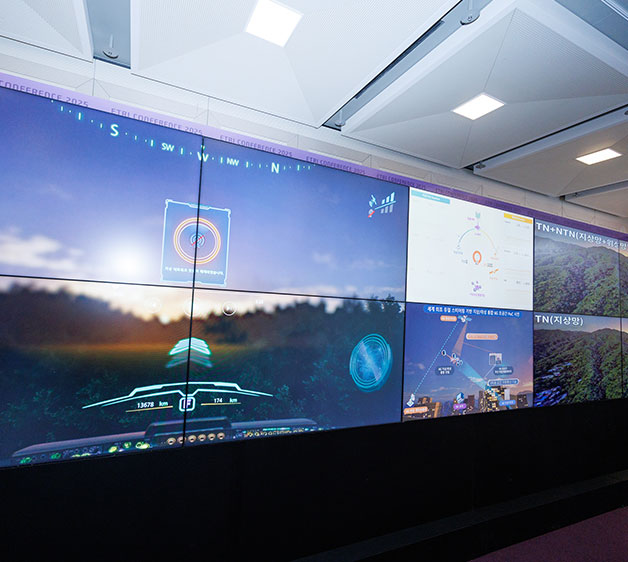
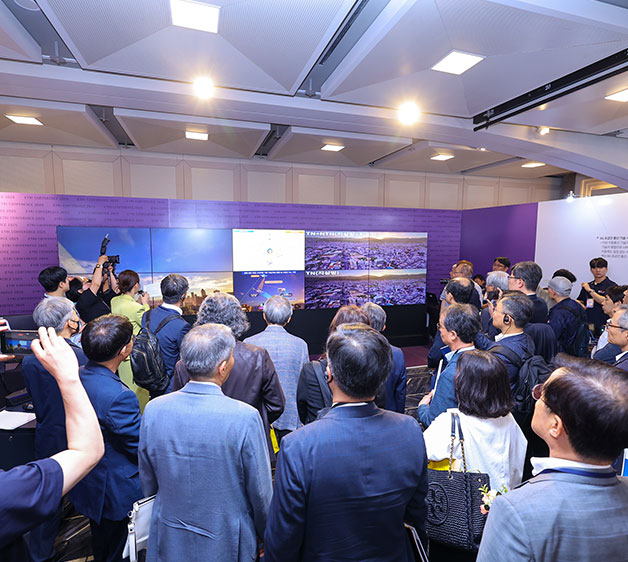
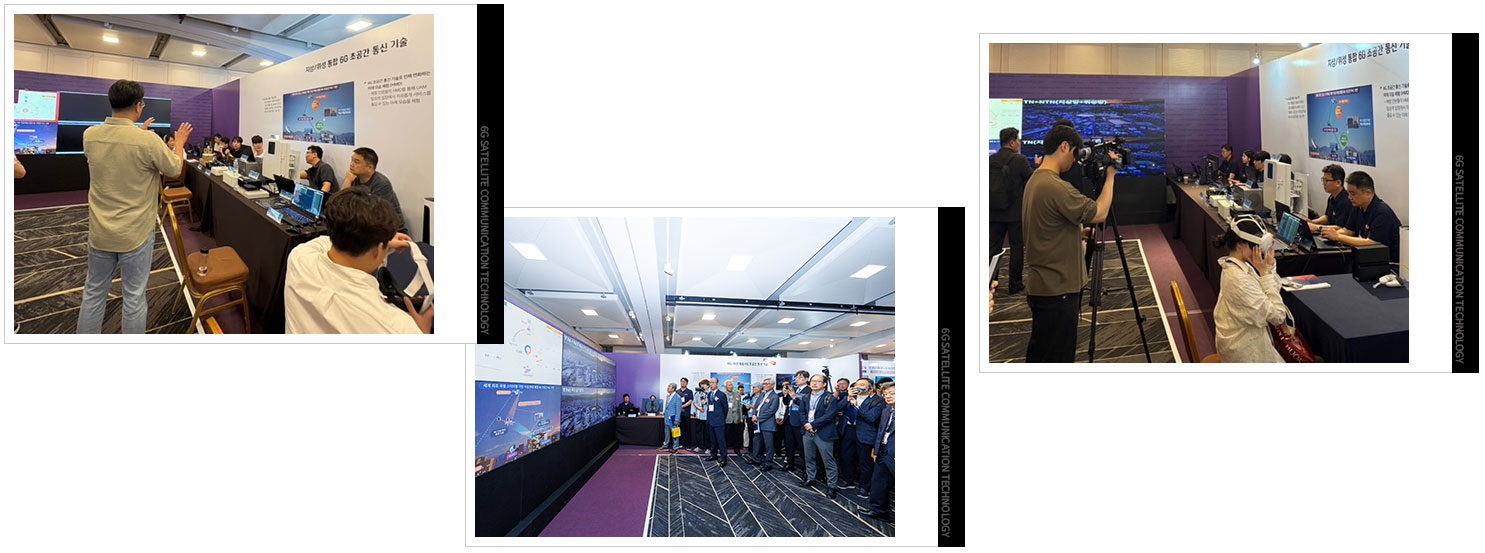
The ETRI research team has secured two technological pillars at once to realize a 6G hyperspace network. The first is core 6G satellite communication technology for an integrated terrestrial-satellite network. To provide stable communications in an environment where numerous low-Earth-orbit satellites form constellations, the team developed satellite clustering technology and a system-level and handover simulator based on the latest 3GPP NR-NTN standard. This is a core technology that enables seamless service even in an environment where hundreds of satellites operate simultaneously.
The second is core payload technology for low-Earth-orbit communication satellite constellations. The research team developed core semiconductors for satellite payloads, such as beamforming integrated circuits for active phased-array antennas and high-power amplifiers, using its own technology, and went as far as fabricating actual prototypes and verifying their performance. This achievement targets both the domestic production and the commercialization of satellite communication equipment.
From International Standards to
the Industrial Ecosystem
The outcomes of this research proved their competitiveness on the international standards stage. Through standardization activities centered on 3GPP and ITU-R, multiple technical contributions were adopted, laying the groundwork for Korea to play a leading role in discussions on 6G satellite communication standards. Technology development, standardization, and patent acquisition have been organically linked.
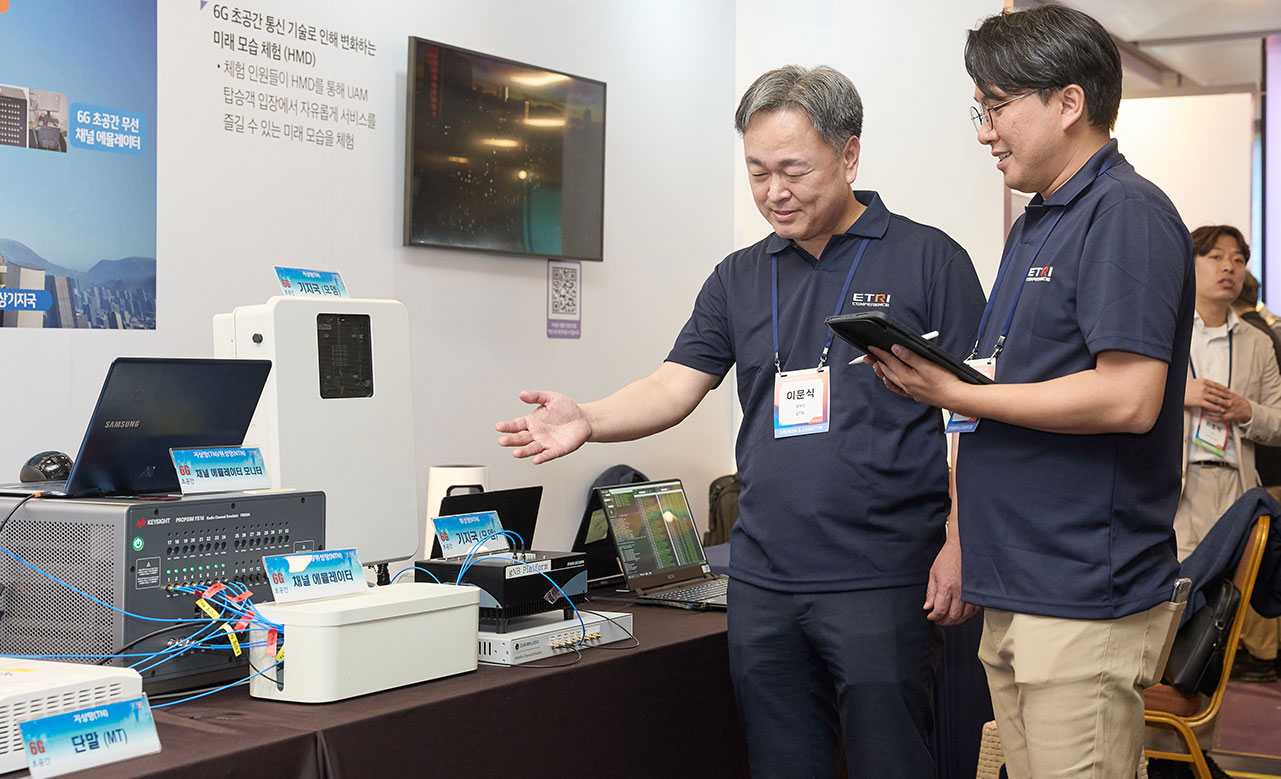
The ripple effects are significant as well. Satellite communications, which complement the limitations of terrestrial networks, can expand into various fields such as autonomous driving, UAM, maritime IoT, and defense communications. In particular, the integrated terrestrial-satellite network goes beyond conventional B2B-oriented communication services to become the foundation of a 6G hyper-connected society that permeates all industries and everyday life. Communications connecting the sky and the ground. ETRI's 6G satellite communication technology is a realistic first step toward opening the era of hyperspace networks.